Top Picks: Best Emulsifiers for Essential Oils in 2023

Welcome to the world of essential oil emulsifiers. If you’re looking to create the perfect blend of fragrances and therapeutic properties, you’ll need high-quality emulsifiers to bring your oils and water-based components together into a stable, usable product. With an array of both natural and synthetic emulsifiers on the market, choosing the right one for your needs can be overwhelming. But don’t worry – we’ve got you covered. This article will walk you through the best emulsifiers for essential oils in 2022, including popular options such as Olivem 1000, Ritamulse SCG (Emulsimulse, ECOMulse), BTMS-25, BTMS-50, Glyceryl Stearate (and) PEG-100 Stearate, and Cetearyl Alcohol (and) Ceteareth-20.
The Importance of Quality Emulsifiers in Essential Oil Formulations
In the world of essential oils, a focus on quality emulsifiers in essential oil formulations is vital for creating stable, homogeneous products that deliver the intended therapeutic benefits. Emulsifiers play a crucial role in blending oil and water-based components to produce smooth, consistent essential oil products that maximize efficacy. The quality of emulsifiers significantly impacts the experience, such as the skin feel, blend stability, and overall effectiveness of essential oils in the formulation.
Quality emulsifiers are essential in producing effective essential oil products that provide a stable and seamless user experience.
Why is it so important to choose quality emulsifiers in essential oil formulations? The answer lies in emulsifiers for blending essential oils effectively, ensuring that the end product maintains its homogeneity and retains potency. As the essential oils disperse evenly throughout the blend, their therapeutic properties can be better harnessed and released, leading to a more enjoyable and beneficial experience.
In addition, using quality emulsifiers in essential oil formulations is vital for achieving a product that feels good on the skin. This increases the likelihood that users will continue to use the essential oil blend, further reaping its benefits and promoting healing and wellness.
| Emulsifier Quality | Benefits |
|---|---|
| Stability | Prevents the essential oils from separating and maintains a consistent blend throughout the product’s shelf life. |
| Skin Feel | Provides a pleasant texture for the user, ensuring the blend feels good when applied to the skin. |
| Effectiveness | Ensures that the essential oils are evenly dispersed throughout the blend to maximize the therapeutic benefits. |
As a creator or consumer of essential oil products, it’s imperative to keep a keen eye on the quality of the emulsifiers used in your formulations. By choosing high-quality emulsifiers and prioritizing their use in your essential oil recipes, you’re taking the crucial step towards a harmonious, effective, and delightful aromatherapy experience.
Breaking Down the Basics: What Are Emulsifiers?
Emulsifiers play an essential role in essential oil formulations, and understanding what they are and how they work is the foundation for creating effective blends. In this section, we’ll discuss the science behind the emulsion process and the purpose of emulsifiers in essential oil products.
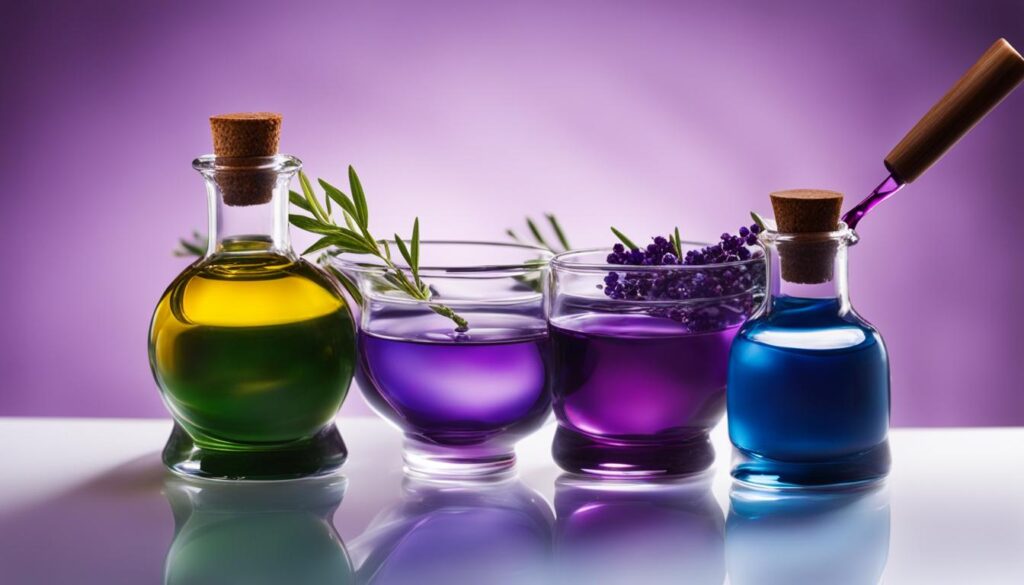
Understanding Emulsion: The Science of Mixing Oil and Water
An emulsion refers to a mixture of two immiscible liquids – like oil and water – that would typically separate due to their differing polarities. Emulsifiers help to stabilize these mixtures by reducing the surface tension between the dispersed (oil) and continuous (water) phases, enabling them to combine and form a uniform blend. This is achieved through the amphiphilic properties of emulsifiers, which have both hydrophilic (water-loving) and lipophilic (oil-loving) components. These components allow emulsifiers to surround the oil droplets, providing a protective barrier that prevents them from coalescing and, thus, stabilizing the emulsion.
Role of Emulsifiers in Essential Oil Blends
Emulsifiers are crucial for maintaining the integrity and performance of essential oil formulations. Let’s look at some of the key roles they play in creating high-quality blends:
- Stabilization: By ensuring the even distribution of oil droplets throughout the aqueous phase, emulsifiers help create a stable product with uniform consistency. This prevents ingredients from separating and provides a cohesive blend of essential oils and other components.
- Aesthetic: The use of emulsifiers in a formulation can enhance the overall appearance and texture of the product. A smooth, homogenous blend is visually appealing and more likely to be perceived as high quality.
- Performance: Emulsifiers can improve the therapeutic efficacy of essential oil products by promoting better dispersion, adhesion, and absorption of the oils onto the skin or through other application methods.
- User experience: Effective emulsifiers can enhance the skin feel and overall experience of using an essential oil product, thereby increasing user satisfaction.
In conclusion, emulsifiers are indispensable components in the world of essential oil formulations. Understanding the science of mixing oil and water, and the role of emulsifiers, helps ensure the creation of stable, effective, and user-friendly essential oil blends.
Top-Rated Emulsifiers for Essential Oils
Experimentation with various emulsifiers has revealed some top-rated emulsifiers for essential oils that are highly recommended by professionals and DIY enthusiasts alike. Among these, BTMS-50 and Glyceryl Stearate (and) PEG-100 Stearate stand out as best-performing emulsifiers. They are known for their superior skin feel, slower thickening process that facilitates easier application, and minimal soaping effect.
These attributes contribute to a more indulgent and user-friendly experience while blending essential oils. In this section, we will showcase the top-rated emulsifiers in a comparative table to provide you with a clear picture of each emulsifier’s benefits, helping you choose the best one for your essential oil recipes.

| Emulsifier | Skin Feel | Thickening Process | Soaping Effect |
|---|---|---|---|
| BTMS-50 | Superior softness | Slow and easy to manage | Minimal |
| Glyceryl Stearate (and) PEG-100 Stearate | Silky and smooth | Slow and even thickening | Minimal |
As you can see from the table above, both BTMS-50 and Glyceryl Stearate (and) PEG-100 Stearate are excellent choices for blending essential oils. While BTMS-50 is especially known for its conditioning properties, Glyceryl Stearate (and) PEG-100 Stearate offers a silky, smooth texture after application, creating an enjoyable experience.
With these top-rated emulsifiers, you can achieve professional-quality results in your homemade essential oil products, ensuring stability, effectiveness, and a luxurious feel on the skin.
Emulsifiers for Blending Essential Oils: Natural Vs. Synthetic Options
When choosing emulsifiers for blending essential oils, one of the critical factors to consider is whether to opt for natural or synthetic options. Both natural and synthetic emulsifiers have their advantages and disadvantages. Ultimately, the right choice will depend on various factors, such as formulation goals, skin sensitivity, and environmental preferences.
Benefits of Natural Emulsifiers for Health and Environment
Natural emulsifiers are derived from plant sources and offer numerous health and environmental benefits. These biocompatible natural emulsifying agents are more easily absorbed by the skin, reducing the risk of irritation or allergic reactions. Some popular natural emulsifiers include Ritamulse SCG, Lecithin, and Cetearyl Olivate.
There are several advantages to using natural emulsifiers:
- Biodegradable: Natural emulsifiers are easily broken down by the environment, reducing their impact on our planet. For environmentally-conscious consumers, this aspect is paramount in their choice of product ingredients.
- Low toxicity: Natural emulsifiers generally have low toxicity levels, making them gentler on the skin and reducing the risk of irritation or allergic reactions.
- Rich in beneficial minor components: Natural emulsifiers often contain additional beneficial components, such as vitamins, fatty acids, and antioxidants, which can enhance the overall effectiveness and nourishing properties of the essential oil blend.

When to Choose Synthetic Emulsifiers
Although natural emulsifiers offer significant benefits, synthetic emulsifiers have their own advantages that make them suitable in certain situations. Some popular synthetic emulsifying agents include Glyceryl Stearate (and) PEG-100 Stearate, Polysorbate 20, and Carbomer.
Here are some reasons to consider using synthetic emulsifiers for blending essential oils:
- Consistent performance: Synthetic emulsifiers often provide more consistent results in terms of emulsification and product stability, ensuring that the product’s look, feel, and shelf life are maintained.
- Availability: Synthetic emulsifiers tend to be widely available and may be a more cost-effective option for small-scale or DIY essential oil product makers.
- Formulation requirements: In some cases, synthetic emulsifiers may provide specific performance characteristics needed in a particular formulation that are not achievable with natural emulsifiers.
In conclusion, the choice between natural and synthetic emulsifiers ultimately depends on factors such as formulation goals, consumer preferences, and environmental considerations. By understanding the benefits and drawbacks of both types of emulsifying agents, you can make a more informed decision when blending your essential oils.
Effective Emulsifiers for Maximum Efficacy of Essential Oils
Ensuring essential oil efficacy in your formulations is critical for delivering the intended benefits of these powerful natural ingredients. Much of this efficacy depends on the choice of emulsifier in your essential oil recipes. Not only do effective emulsifiers help create a stable and uniform blend, they also contribute to an overall superior skin-feel and user experience.
Consider BTMS-50 and Glyceryl Stearate as top examples of emulsifiers that can provide maximum benefit in essential oil recipes. Here’s a comparison of these two popular emulsifiers:
| Emulsifier | Benefits | Drawbacks |
|---|---|---|
| BTMS-50 |
|
|
| Glyceryl Stearate (and) PEG-100 Stearate |
|
|
Keep in mind that not all emulsifiers can promise the same level of efficacy. Some may struggle with soaping or foaming issues, while others might emit a pungent odour. It is essential to choose an emulsifier that powerfully stabilises the blend, offers an elegant texture, and is devoid of any unpalatable characteristics.
“The right emulsifier can dramatically enhance the overall quality of your essential oil recipes, promoting greater efficacy and elevated user satisfaction.”
In conclusion, effective emulsifiers for essential oil recipes, like BTMS-50 and Glyceryl Stearate (and) PEG-100 Stearate, can play a central role in ensuring the maximum efficacy of your essential oil blends. By prioritising the stabilisation, skin-feel, and overall user experience, you can create essential oil formulations that do not disappoint.
How to Choose the Right Emulsifier for Your Essential Oil Recipes
Selecting the ideal emulsifier for your essential oil formulations can greatly affect the overall quality and effectiveness of your end product. To make an informed decision, you should consider factors such as emulsifier compatibility, skin sensitivity, and the purpose of your formulation. This will help you achieve the desired results while ensuring user satisfaction and safety.
Factors to Consider: Compatibility, Skin Sensitivity, and Purpose
Emulsifier compatibility is essential to achieve stable and effective essential oil mixtures. Be sure to choose an emulsifier that is compatible with the essential oils and other ingredients in your formulation. This will prevent the separation of components over time and ensure that your product maintains its desired properties.
Skin sensitivity should also be taken into account when choosing the right emulsifiers for essential oils. Some emulsifiers can cause irritation or allergic reactions for certain users, so selecting one that has a low likelihood of causing sensitivities is important. Choose emulsifiers with a good safety record and consider conducting patch tests to ensure users won’t experience undesired effects.
The purpose of your formulation is another crucial factor to consider. Different emulsifiers may have unique properties that make them more suitable for specific types of essential oil products. For example:
- BTMS-50 offers conditioning properties, making it an excellent choice for hair and skincare formulations.
- Ritamulse SCG, a natural emulsifier, may be preferred for products targeting users with dry skin or those seeking eco-friendly solutions.
To better understand which emulsifiers are best suited for specific purposes, refer to the table below:
| Emulsifier | Type | Best for | Skin Sensitivity |
|---|---|---|---|
| BTMS-50 | Synthetic | Hair and Skincare | Low |
| Ritamulse SCG | Natural | Dry Skin, Eco-friendly Products | Low |
| Olivem 1000 | Natural | General Purpose Emulsifier | Low to Moderate |
| Glyceryl Stearate (and) PEG-100 Stearate | Synthetic | Smooth Textures | Low to Moderate |
By considering these factors, you will be better equipped to make an informed decision about the right emulsifier for your essential oil recipes. The result will be a stable and effective product that meets the needs and preferences of your target audience.
Essential Oil Emulsifiers for Better Dispersion: Expert Reviews
Expert emulsifier reviews offer valuable insights into the performance and efficacy of different emulsifiers in essential oil products. According to emulsifier performance analysis, two particular emulsifiers stand out for better dispersion: Glyceryl Stearate (and) PEG-100 Stearate and BTMS-50.
Their slow thickening properties are an essential feature, allowing for easy product application and an indulgent skin feel. Let’s take a closer look at the factors that make these emulsifiers best choices for essential oil formulations.
“Glyceryl Stearate (and) PEG-100 Stearate and BTMS-50 excel in essential oil formulations thanks to their slow thickening properties and remarkable skin feel.” – Emulsifier Expert
- Slow thickening properties: The gradual thickening effect of both Glyceryl Stearate (and) PEG-100 Stearate and BTMS-50 makes blending and application a breeze, helping to achieve a luxurious final product.
- Indulgent skin feel: These emulsifiers provide a superior skin feel, ensuring the user enjoys a silky, smooth experience when using essential oil products formulated with these emulsifiers.
- Increased user satisfaction: Enhanced product performance combined with an exceptional skin feel provide maximum benefit and increased user satisfaction.
Considering the benefits of these two emulsifiers, it’s clear why expert reviews recommend them for better dispersion in essential oil products. However, it’s crucial to remember that choosing the right emulsifier is highly dependent on the intended use and individual preferences of the user.
| Emulsifier | Slow Thickening Properties | Skin Feel |
|---|---|---|
| Glyceryl Stearate (and) PEG-100 Stearate | Yes | Smooth, Silky |
| BTMS-50 | Yes | Silky, Cushiony |
In conclusion, expert emulsifier reviews such as these offer a solid starting point when selecting essential oil emulsifiers for better dispersion. Keep in mind the intended purpose, application, and desired skin feel when choosing the best emulsifier for your essential oil products.
Popular Emulsifiers for DIY Essential Oil Products
When it comes to creating DIY essential oil products, both amateurs and professionals alike need to navigate the emulsifier market. This process can often seem overwhelming with so many options available. Here, we’ll guide you through the market in a way that’s easy to comprehend, highlighting consumer favourites and industry-standard emulsifiers.
Navigating the Market: Consumer Favourites and Industry Standards
For DIY enthusiasts who create their own essential oil products, consumer favourites play an essential role in identifying the most popular emulsifiers. One such popular emulsifier is Olivem 1000, which is well-liked due to its easy availability and ease of use. However, it is important to note that Olivem 1000 has a soaping tendency, which might not be suitable for all applications.
When it comes to industry standards, emulsifiers like BTMS-50 and Glyceryl Stearate (and) PEG-100 Stearate are commonly used for their consistent results and positive consumer feedback. Both of these emulsifiers are known for providing stable emulsions and excellent skin feel, making them perfect for both professional and personal use.
“Finding the right emulsifier for your essential oil products is crucial in ensuring a stable and enjoyable end product. By selecting either consumer favourites or industry-standard emulsifiers, you can create professional-grade essential oil products right in your own home.”
Here’s a quick comparison of the popular emulsifiers for DIY essential oil products:
| Emulsifier | Key Features | Best For |
|---|---|---|
| Olivem 1000 | Easy availability, ease of use, soaping tendency | General essential oil products when soaping effect is not a concern |
| BTMS-50 | Excellent skin feel, consistent results, positive consumer feedback | High-quality essential oil products where skin feel is important |
| Glyceryl Stearate (and) PEG-100 Stearate | Stable emulsions, excellent skin feel, positive consumer feedback | Professional-grade essential oil products for ultimate performance |
By understanding the various popular emulsifiers for essential oil products and navigating the market effectively, you can make informed decisions and select the ideal emulsifier for your specific needs. This will enable you to create high-quality essential oil products that not only look and feel great but also deliver the desired therapeutic benefits.
Conclusion
In our quest to identify the best emulsifiers for essential oils in 2022, a variety of suitable options catering to different purposes and preferences have emerged. From the rapid, effective thickening of Olivem 1000 to the plush, slow-setting nature of Glyceryl Stearate (and) PEG-100 Stearate, there’s an emulsifier to meet every need.
As you make your choice between natural or synthetic emulsifiers, it’s essential to strike a balance between user experience, formulation stability, and environmental consideration. Natural emulsifiers like Ritamulse SCG offer biodegradable properties and skin-protection benefits, while synthetic options such as Glyceryl Stearate (and) PEG-100 Stearate provide consistent performance and a smooth product texture.
In the end, selecting the right emulsifier is crucial for achieving the maximum efficacy of your essential oil blends and ensuring a satisfying user experience. For any queries or further information, don’t hesitate to reach out to the experts at info@aromatherapy.org.nz.
FAQ
What are the top picks for essential oil emulsifiers in 2022?
The top emulsifiers for essential oils in 2022 include Olivem 1000, Ritamulse SCG (Emulsimulse, ECOMulse), BTMS-25, BTMS-50, Glyceryl Stearate (and) PEG-100 Stearate, and Cetearyl Alcohol (and) Ceteareth-20.
What is the importance of quality emulsifiers in essential oil formulations?
Quality emulsifiers ensure a stable, homogeneous product that delivers the intended therapeutic benefits, good skin feel, stability of the blend, and the overall effectiveness of essential oils in the formulation.
How do emulsifiers work in essential oil blends?
Emulsifiers stabilize mixtures by reducing the surface tension between the dispersed (oil) and continuous (water) phases, enabling them to become a uniform blend. They maintain product integrity and prevent the oils from separating out of the mixture.
What are some top-rated emulsifiers for essential oils?
Top-rated emulsifiers include BTMS-50, Glyceryl Stearate (and) PEG-100 Stearate, and Ritamulse SCG. These emulsifiers are known for their superior skin feel, slower thickening process, and minimal soaping effect, offering a more indulgent and user-friendly experience.
What are the benefits of natural emulsifiers compared to synthetic emulsifiers?
Natural emulsifiers, like Ritamulse SCG, offer biocompatibility, environmental benefits, biodegradable nature, low toxicity, and rich content of minor components such as vitamins and fatty acids. Synthetic emulsifiers, like Glyceryl Stearate (and) PEG-100 Stearate, are chosen for their ability to produce a smooth texture and consistent performance.
How do effective emulsifiers enhance the efficacy of essential oils?
Effective emulsifiers ensure the uniformity of the essential oil blend and improve skin-feel, providing a satiny, cushiony finish without soaping or cationic smell issues. This contributes to the overall quality and effectiveness of essential oil products.
What factors should be considered when choosing an emulsifier for essential oil recipes?
Factors to consider include compatibility with essential oils used, potential skin sensitivities, and the overall purpose of the formulation. For example, certain emulsifiers offer conditioning properties suitable for hair and skincare, while others may be preferred for their natural composition.
What are some popular emulsifiers for DIY essential oil products?
Consumer favourite emulsifiers for DIY essential oil products include Olivem 1000, BTMS-50, and Glyceryl Stearate (and) PEG-100 Stearate, which are popular for their availability, ease of use, and consistent results.